

From insight to action: How AI and Dynamics 365 are redefining customer engagement

Customer engagement is changing. Not because organizations interact more often with customers, but because every interaction is now shaped by data, context, and execution. Microsoft’s vision for Dynamics 365 reflects this shift clearly: customer engagement is no longer a single function or system—it is a cross‑functional capability that spans the entire business.
By combining Dynamics 365, Microsoft Copilot, and Microsoft 365, Microsoft is redefining engagement as something that happens continuously—across journeys, interactions, insights, and execution—rather than at isolated touchpoints.

Customer engagement is a business capability, not a department
In Microsoft’s platform vision, customer engagement does not belong to one team or application. It emerges from the connection between customer interactions and business operations.
Every customer journey is influenced by operational reality: pricing, availability, delivery, invoicing, service commitments, and sustainability goals. Dynamics 365 Business Central provides this operational and financial context, while customer‑facing applications shape how organizations interact, respond, and adapt.
The result is a more holistic engagement model—one where conversations are informed by facts, and commitments are backed by execution.
Journeys are shaped by insight, not assumptions
Microsoft increasingly frames engagement in terms of customer journeys rather than individual transactions. Journeys are dynamic: they evolve over time, across channels, and across teams.
To support this, Dynamics 365 brings together customer signals from multiple sources—interactions, transactions, and behavioral data—and turns them into actionable insight. This allows organizations to move from reactive engagement to context‑aware decision‑making, guided by a shared understanding of the customer.
Customer journeys become more relevant when insight flows freely between teams, rather than being locked inside functional silos.


Copilot turns data into understanding
A key enabler of this shift is Microsoft Copilot. Embedded across Dynamics 365 and Microsoft 365, Copilot allows users to interact with business data using natural language—asking questions, summarizing context, and identifying next steps without technical barriers.
For customer engagement, this means:
- Customer-facing teams gain instant understanding of history, status and commitments
- Business users can explore insights without relying on reports or exports
- Decisions are made faster, with greater confidence
Copilot does not replace human judgment; it augments it by reducing friction between data and understanding. Engagement becomes more consistent because everyone works from the same context.
Engagement happens in the flow of work
Microsoft’s strategy recognizes a simple reality: customer interactions happen where people work—in email, meetings, chats, documents, and spreadsheets.
By embedding Dynamics 365 insights directly into Microsoft 365 applications such as Outlook, Teams, Excel, and Power BI, Microsoft brings engagement into the flow of work. Users no longer need to switch contexts to understand a customer situation; insight is available exactly where decisions are made.
This approach shifts engagement from being tool‑driven to being work‑driven, making interactions more natural and more effective.
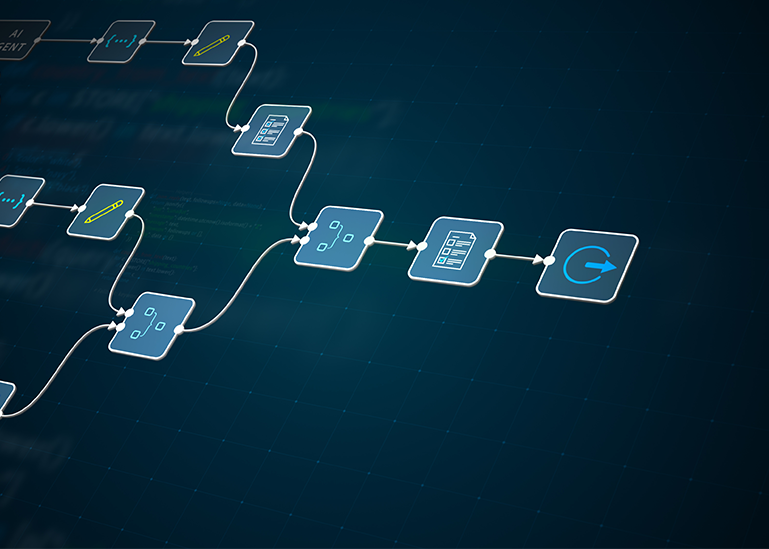

From interaction to execution
True engagement does not stop at understanding—it requires execution. Commitments made during customer interactions must be fulfilled reliably across finance, operations, and service delivery.
Dynamics 365 supports this by connecting engagement directly to execution:
- Interactions trigger operational actions
- Business events inform customer communication
- Insights lead to measurable outcomes
Microsoft’s investment in AI‑assisted automation and intelligent agents reinforces this connection. Structured tasks can be supported or prepared automatically, allowing teams to focus on judgment, empathy, and value creation.
Engagement becomes credible when insight leads to action—and action leads to results.
A cross-functional model for engagement
What emerges is a fundamentally different engagement model:
- Journeys that span the entire customer lifecycle
- Interactions informed by real‑time business context
- Insights generated continuously from connected data
- Execution embedded into everyday operations
This is not about adding another system. It is about connecting capabilities across the organization, supported by AI and shared data.

Conclusion: Engagement as a strategic advantage
Microsoft’s vision for Dynamics 365 positions customer engagement as a strategic capability—one that is powered by insight, enabled by AI, and grounded in execution.
By unifying operations, interactions, and intelligence, organizations can move beyond fragmented experiences and deliver engagement that is consistent, informed, and trustworthy.
In a world where customers expect relevance and reliability, engagement is no longer just about what you say—it is about what you know and how well you deliver.
If you have more questions or
need help