

Sustainability: Building a Better Future with Jabra
Jabra is dedicated to developing sustainable technology that benefits both people and the planet. Guided by the UN Sustainable Development Goals, Jabra focuses on health, economic growth, innovation, responsible consumption, and climate action.
With strong social and environmental responsibility, Jabra has earned top ratings from EcoVadis and MSCI ESG. The company champions the circular economy by designing recyclable products and reducing waste through initiatives like the Take-Back Program. Sustainability is embedded in Jabra’s culture, driving continuous eco-friendly innovation. By empowering customers and partners to recycle and reduce their environmental footprint, Jabra leads in sustainable technology without compromising performance.

Sustainability Across the Full Product Lifecycle
Jabra integrates sustainability at every product stage, using lifecycle assessments (LCAs) to measure and minimize environmental impact. Many products are TCO Certified, confirming independent sustainability across their lifecycle. The company aims to use over 50% sustainable materials, including recycled and bio-based components, in new products by 2025. Recent launches already include recycled plastics. This commitment extends to eco-friendly packaging and resource management, maximizing material reuse. Detailed sustainability reports and certifications highlight Jabra’s dedication to ethical business and environmental stewardship.
Carbon Reduction: Technology in Harmony with Nature
Jabra is committed to cutting carbon emissions rapidly, following science-based targets approved in 2022. The company measures emissions across operations and products, aiming for 100% renewable energy at all sites by 2025. To reduce supply chain emissions, Jabra focuses on sustainable materials and collaborates with suppliers to lower manufacturing footprints. Switching from air to ocean freight cut transportation emissions by 12,000 metric tons CO2e in 2022. Jabra also helps customers reduce emissions by promoting virtual meetings, which are up to 92% more climate friendly than flying. Employee business travel is set to halve compared to 2019, supported by incentives and electric vehicle charging stations. Continuous lifecycle assessments identify carbon hotspots for ongoing improvements.
Ethical, Fair, and Safe Global Supply Chain
Jabra protects human rights across its global supply chain by following the UN Principles of Responsible Business and Responsible Business Alliance (RBA) standards. As an RBA Affiliate Member, Jabra works to improve labor conditions, environmental performance, and ethics among suppliers. It audits all key suppliers based on the SA8000 standard, covering labor rights, health and safety, and sustainability.
Jabra strictly excludes conflict minerals like tantalum, tin, tungsten, and gold from exploitative sources, following OECD due diligence guidance. To boost transparency, Jabra is adopting the EcoVadis platform to monitor and improve supplier ESG performance. This ongoing commitment ensures a responsible, ethical supply chain aligned with global standards.
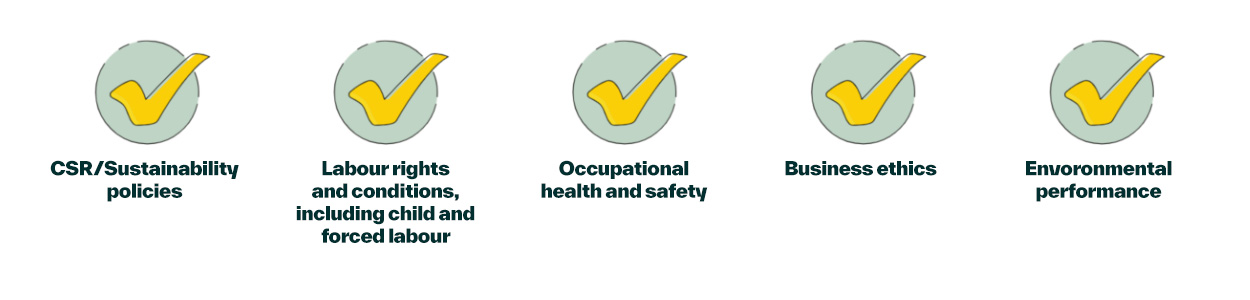
Audits for all key suppliers
As part of Jabra’s safeguarding and human rights due diligence, Jabra audits all of their suppliers, across the following areas, based on the SA8000 standard
Want to learn more about Jabra and the portfolio?