
How Generative AI
is Empowering Artists
and Designers

For decades, technology has shaped the way artists and designers create, from the invention of the camera to the rise of digital illustration tools. Today, we are in the midst of another transformative shift: the rise of generative AI. Far from replacing human creativity, this new wave of technology is expanding what’s possible, enabling creators to explore ideas faster, push boundaries further, and redefine the very nature of art and design.
A New Kind of Creative Partner
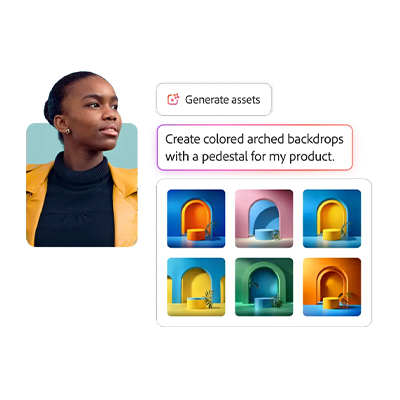
Generative AI tools can produce images, text, music, and even entire design systems from simple prompts. What makes this revolutionary is not just the output, but the process. Instead of starting from a blank canvas, creators can now begin with a spark, an idea expressed in words, and instantly see it take shape.
This fundamentally changes the creative workflow. Artists are no longer limited by technical skill alone; they can iterate rapidly, test multiple directions, and refine concepts in minutes rather than hours or days. AI becomes less of a tool and more of a collaborator, one that responds, adapts, and inspires.
Lowering Barriers,
Expanding Access
One of the most powerful impacts of generative AI is accessibility. Traditionally, high-level design or illustration required years of training and expensive software. Now, beginners can produce compelling visuals, mock-ups, and concepts with minimal technical knowledge.
This democratization of creativity is opening doors for people who may have never considered themselves “artists.” Entrepreneurs can design their own branding, writers can visualize their stories, and hobbyists can experiment freely. The creative world is becoming more inclusive, diverse, and dynamic as a result.
Accelerating Professional Workflows
For professional designers and artists, generative AI is less about replacement and more about acceleration. Tasks that once consumed hours, such as generating variations, mood boards, or draft compositions, can now be completed in seconds. Look at the new Adobe Acrobat Studio for example taking these workflows and making them accessible to all job roles. This allows creatives to focus on higher-level thinking: storytelling, emotional impact, and conceptual depth. Instead of spending time on repetitive production tasks, they can invest more energy in refining ideas and crafting meaningful experiences.
In fields like advertising, game design, and architecture, AI is already streamlining workflows and enabling teams to prototype at unprecedented speed. The result is not just efficiency, but a broader exploration of creative possibilities.
Redefining Originality and Authorship
With these new capabilities come new questions. What does originality mean when an AI can generate thousands of variations in seconds? Who owns a piece of art created with machine assistance?
These questions are reshaping conversations around creativity. Rather than diminishing human contribution, generative AI highlights the importance of intent, direction, and curation. The artist’s role evolves, from sole creator to creative director, guiding and shaping outputs into something meaningful.
In this sense, creativity becomes less about producing every detail by hand and more about making choices: selecting, refining, and contextualizing ideas.
Challenges and Ethical Considerations
The rise of generative AI is not without controversy. Concerns about copyright, data usage, and the potential displacement of creative jobs are ongoing. Many artists worry about their work being used to train AI systems without consent or compensation.
There is also the risk of homogenization, if everyone uses similar tools and datasets, creative outputs may begin to feel repetitive or derivative. Maintaining originality in an AI-assisted world requires intentionality and a strong creative voice.
Addressing these challenges will require collaboration between technologists, artists, and policymakers to ensure fair practices and sustainable creative ecosystems.
The Future of Creativity
Generative AI is not the end of human creativity, it’s an evolution of it. Just as photography didn’t replace painting and digital tools didn’t eliminate traditional art, AI is adding a new dimension to creative expression.
The most exciting possibilities lie in hybrid workflows, where human intuition and machine intelligence work together. Artists who embrace these tools can explore uncharted territory, blending imagination with computational power in ways previously unimaginable.
Ultimately, the creative revolution is not about technology alone. It’s about empowerment, giving more people the ability to create, experiment, and share their vision with the world.
And in that sense, generative AI isn’t replacing creativity. It’s amplifying it.
About the author:
Charlotte Bateson is a Pre-Sales Technical Specialist for Adobe at TD SYNNEX, where she is part of the Centre of Excellence team. With over three years of experience working with Adobe solutions in the Creative and Document Cloud space, Charlotte brings a strong blend of technical insight and creative passion to her role. She is particularly focused on the evolving landscape of generative AI and how it empowers creative professionals. Charlotte is passionate about helping organizations unlock the full potential of Adobe’s tools to drive innovation and storytelling.